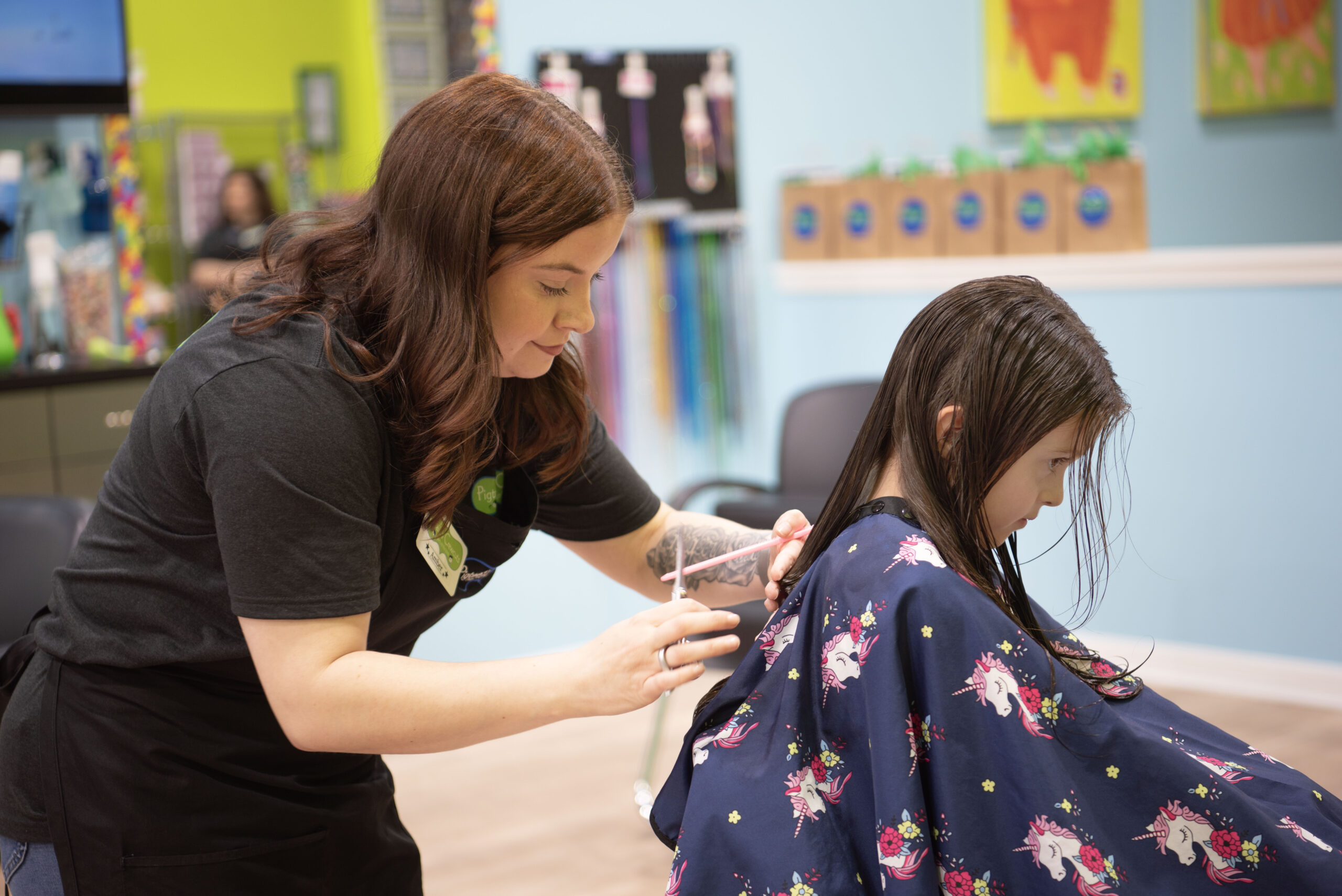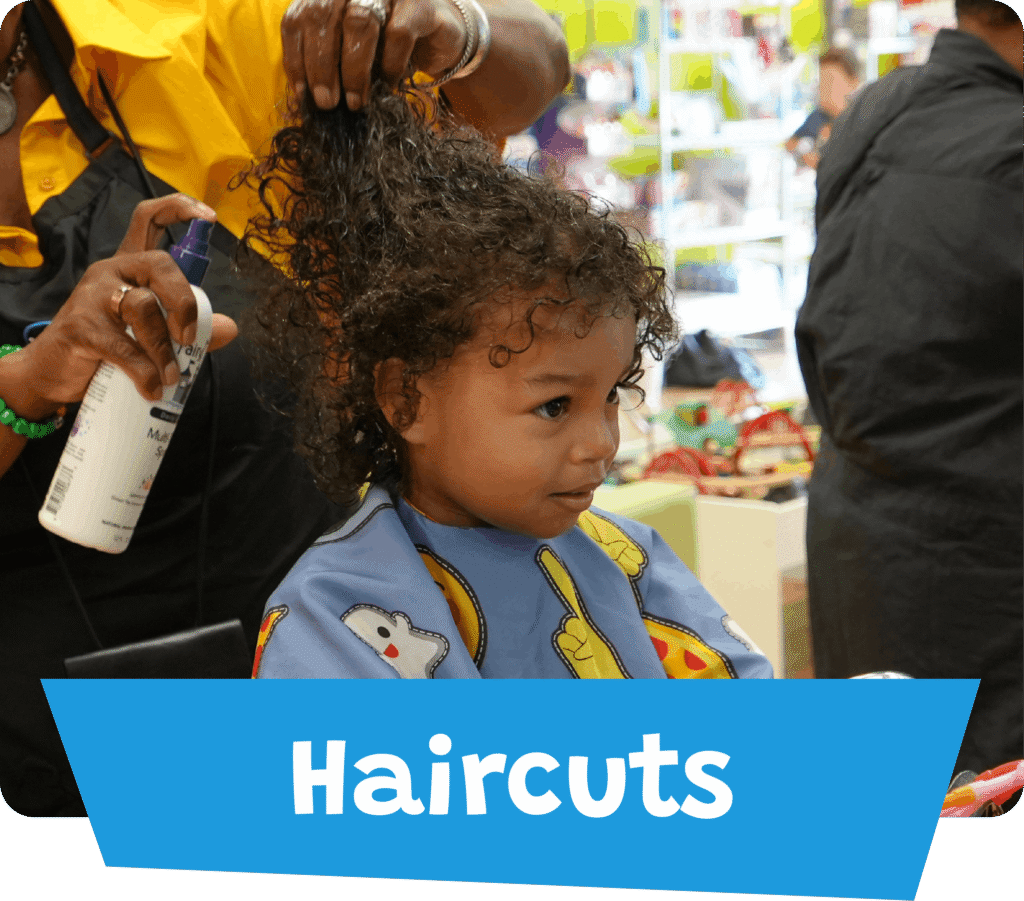
Some children cry or panic during haircuts because the experience combines unfamiliar sensations, loud sounds, close contact, new tools, and a temporary loss of control. For toddlers and children with sensory sensitivities, even an ordinary trim can feel unpredictable or physically uncomfortable. Their reaction does not mean a parent has done anything wrong.
If your child screams, hides, freezes, or tries to leave the chair, you are not the only parent who has experienced it. Understanding what may be driving the reaction can help you respond with less pressure and more confidence.
Why Do Some Kids Hate Haircuts?
Children do not experience a haircut in the same way adults do. An adult understands why scissors are close to the head, knows that buzzing clippers are unlikely to hurt, and can estimate when the appointment will end. A young child may not have that context.
The reaction can also change from one visit to another. A child who managed a previous haircut may be tired, hungry, more aware of the tools, or sensitive to a different sound or sensation the next time. Looking for the reason behind the reaction is usually more helpful than labeling the child as difficult.
Sensory Overload Can Make a Haircut Feel Intense
A salon can involve many sensations at once: bright lights, music, conversation, hair dryers, water spray, combing, a cape around the neck, and loose hair touching the skin. Scissors create repeated movement near the face and ears. Clippers add vibration as well as sound.
Some children notice these sensations more strongly than others. A cape may feel restrictive, a gentle mist may feel startling, or tiny pieces of hair may itch in a way the child cannot ignore. When several uncomfortable sensations happen together, crying or trying to escape may be the child’s clearest way to communicate that it is too much.
Fear of the Unknown Can Increase Haircut Anxiety
A first haircut or a visit to a new salon includes many unknowns. A child may not understand where they are going, who will touch their hair, what the tools do, or whether the haircut will hurt. Words such as “cut” can sound worrying when a child connects them with pain.
Uncertainty can continue during the appointment. If the child cannot see the stylist behind them or does not know which step comes next, each new touch or sound may feel like a surprise. This can be especially difficult for children who feel safer with routines and clear sequences.
Clippers and Other Tools May Look or Sound Frightening
Haircutting tools are ordinary to adults but unusual to children. Clippers buzz and vibrate close to sensitive areas. Scissors move near the eyes and ears. Spray bottles, combs, neck strips, and capes may also be unfamiliar.
A child may fear that scissors or clippers will hurt even when they have never experienced a painful haircut. Another child may remember a previous moment when hair was pulled, water reached their face, or a loud tool startled them. The fear is real to the child, even when an adult knows the tool is being used safely.
Sitting Still Can Feel Like Losing Control
During a haircut, adults often ask children to sit in one place, keep their head still, wear a cape, and allow someone else to decide when to touch their hair. A child may also hear several directions in quick succession: look down, turn this way, keep your hands still, and wait.
For a toddler who is developing independence, or any child who needs movement and choice, that can feel like a major loss of control. Resistance may be an attempt to regain control rather than a refusal to cooperate.
Small choices can make the experience feel more manageable. A child may be able to choose a chair, select what to watch, hold a familiar toy, or decide whether the stylist begins on the left or right side. These choices do not remove every difficult sensation, but they can help the child feel included in the process.
Unfamiliar People and Close Contact Can Be Uncomfortable
A stylist needs to work close to a child’s face, head, and ears. Some children need more time before they feel comfortable with a new person in their personal space. Others may dislike unexpected touch or find it difficult to understand what the stylist is asking.
This does not mean the child is being rude or unfriendly. They may simply need a slower introduction, fewer words, or an opportunity to watch before participating.
A stylist can help by explaining each step before beginning, showing the child a tool, and waiting for a sign that the child is ready. Parents can also tell the stylist which words, gestures, or communication methods work best for their child.
Is a Strong Haircut Reaction Normal?
Fear and resistance around haircuts are common, particularly among toddlers, children receiving their first haircuts, and those entering unfamiliar environments. Children are still learning how to understand new experiences and express discomfort. Crying during a haircut is not a verdict on your parenting, and it is not something you need to feel embarrassed about.
Try to notice patterns. Does your child react before arriving, only when the clippers turn on, when the cape is fastened, or when loose hair touches the neck? The timing can provide useful clues about which part of the experience is difficult.
If reactions are severe, occur across many everyday activities, or cause concern beyond haircut day, a pediatrician or another qualified professional can help you determine whether additional support may be useful.
How Can Parents Respond Without Adding Pressure?
Start by treating the reaction as communication. Acknowledge what your child seems to be experiencing without shaming them or promising that they should not feel afraid. Calm statements such as “That sound is loud,” “You do not like the cape,” or “You want a break” can show that you are listening.
When possible, slow the process down. Give one direction at a time, ask for a pause before distress becomes overwhelming, and decide which part of the haircut matters most. A visit does not have to look perfect to be useful. Leaving with trust intact may be more valuable than completing every detail.
Parents can also review age-based expectations and practical guidance in the kids’ haircuts in Anderson, SC resource center.
How Can the Be Brave Today Story Help?
How Pigtails & Crewcuts Anderson Can Support the Visit
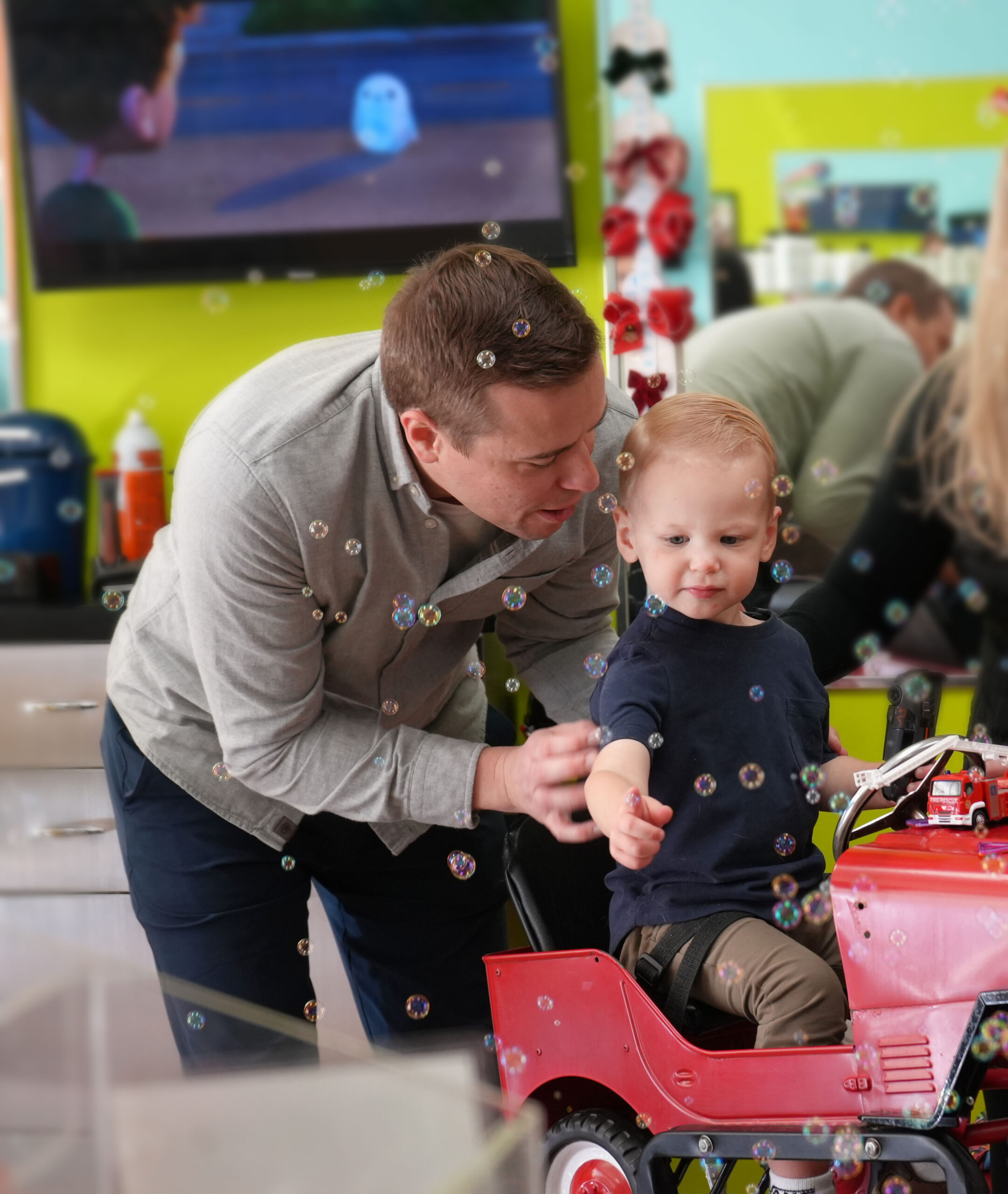
Pigtails & Crewcuts Anderson welcomes children with different needs and works with families to make each visit as comfortable and manageable as possible. The salon offers vehicle-themed chairs, kid-friendly entertainment, a wooden train table, and a family-focused environment. These features can provide familiar distractions and simple choices while the stylist works.
Parents and caregivers are encouraged to explain their child’s preferences, communication style, and possible triggers before the haircut begins. A child may need a slower introduction, additional explanations, brief pauses, or a simplified haircut plan. Sharing this information gives the stylist practical guidance for supporting the visit.
Pigtails & Crewcuts Anderson also uses consistent haircut pricing rather than changing the price according to whether the haircut takes up to 30 minutes. This can be reassuring for families whose children may need a slower pace, more explanation, or brief pauses. Parents can focus on helping their child feel comfortable without worrying that taking additional time will automatically increase the haircut price.
No salon feature can guarantee a tear-free visit, and every child’s response will be different. The most helpful approach is often a combination of patience, clear communication, realistic expectations, and attention to the child’s cues.
For a closer look at sensory triggers, supportive salon features, and questions parents can ask, read the guide to finding a sensory-friendly kids’ salon in Anderson, SC.
Frequently Asked Questions
Why Does My Toddler Scream at the Hair Salon?
A toddler may be reacting to unfamiliar people, close contact, loud tools, loose hair, a restrictive cape, or being asked to sit still. Toddlers may also lack the words to explain what feels wrong, so screaming can be their clearest way to communicate fear, discomfort, or a need to stop.
Is It Normal for Kids to Be Scared of Haircuts?
Yes. Many children feel nervous about haircuts, especially during the toddler years, at a first appointment, or in a new environment. Fear may lessen as the experience becomes more familiar, but every child adjusts at a different pace. Patience and predictable preparation can help build trust over time.
Why Is My Child Afraid of Hair Clippers?
Clippers make noise and create vibration close to the head and ears. A child may be startled by the sensation, fear that the tool will hurt, or remember a previous uncomfortable experience. Seeing or hearing the tool from a comfortable distance before it is used may make it feel less unfamiliar.
Can a Haircut Cause Sensory Overload?
A haircut can become overwhelming when several sensations occur together, including bright lights, conversation, buzzing tools, water spray, touch, a cape, and loose hair. Children have different sensory preferences, so the most difficult part will not be the same for every child.
Why Does My Child Hate the Haircut Cape?
The cape may feel tight, warm, unfamiliar, or restrictive around the neck and shoulders. Some children also dislike hearing it rustle or feeling unable to move their arms freely. Parents can ask the stylist whether adjusting, loosening, or safely avoiding the cape may be possible.
Should I Feel Embarrassed if My Child Cries During a Haircut?
No. Crying is a common response to fear, discomfort, or uncertainty, and it does not mean you have failed as a parent. Focus on your child’s cues and the safest next step rather than what other people may think. A pause or shortened appointment can sometimes be the best decision.
Does the Haircut Cost More if My Child Needs Additional Time?
Pigtails & Crewcuts Anderson uses consistent haircut pricing rather than charging according to whether the haircut takes up to 30 minutes. This allows the stylist to work at a pace suited to the child, including brief pauses when needed, without the haircut price automatically increasing because the visit takes longer.
Understanding Comes Before a More Comfortable Haircut
When a child cries or panics during a haircut, the behavior often makes more sense once you consider the sounds, sensations, uncertainty, close contact, and loss of control involved. Responding with curiosity and patience can help protect trust, even if the haircut needs to be shortened or stopped.
Resources such as Be Brave Today, advance communication with the stylist, and a child-focused environment can help make the next visit more predictable. When you are ready, the sensory-friendly kids’ salon in Anderson, SC guide explains what supportive features to look for and how to plan the next step at your child’s pace.